
How Often Should You Walk Your Dog? A Guide for Puppies, Adults & Senior Dogs
Updated: Sep 16

If you’re a dog parent, you’ve probably wondered: How often should I actually be walking my dog?
The answer isn’t exactly the same for every pup. A four-month-old puppy, a high-energy adult dog, and a 12-year-old senior all have very different exercise needs. Breed, health, energy level, size, and even the weather can affect how much walking is appropriate.
Here in Kailua, we also have another factor to think about: Hawaiʻi’s heat and humidity. A walk that feels comfortable early in the morning can feel completely different in the middle of a sunny afternoon.
Whether you live here on Oʻahu or somewhere else entirely, here’s how to think about your dog’s daily walks at every stage of life.
Why Daily Walks Matter
Walking your dog does much more than give them a chance to go potty.
Regular walks provide physical exercise, help maintain muscle and a healthy weight, and give dogs an important opportunity to explore their environment.
But one of the biggest benefits is something we sometimes overlook: mental enrichment.
Your dog experiences the neighborhood primarily through their nose. Stopping to investigate a patch of grass, following an interesting scent, or exploring a slightly different route provides valuable mental stimulation.
That means a good walk doesn’t always need to be a long or fast walk.
Sometimes a slower “sniff walk” can be exactly what your dog needs.
How Often Should You Walk a Puppy?
Puppies may seem like they have unlimited energy, but their bodies are still developing.
Instead of taking a young puppy on one long walk, puppies generally do better with multiple short walks and play sessions throughout the day.
For a young puppy, this might look like:
Short 5–15 minute walks or outdoor exploration sessions
Several potty trips throughout the day
Gentle play at home
Short training sessions
Opportunities to safely experience new sights, sounds, surfaces, people, and environments
As your puppy grows, walks can gradually become longer.
Try not to focus only on tiring your puppy out physically. Training, sniffing, exploring, puzzle toys, and other forms of enrichment can work their brain without putting unnecessary stress on a growing body.
This is especially important for large and giant breeds, which can continue physically maturing much longer than smaller dogs.
Your veterinarian can help you determine how much structured exercise is appropriate for your individual puppy.
Puppy Walking Tip
A puppy who suddenly sits down, lies down, starts lagging behind, or seems reluctant to continue may be telling you they’ve had enough.
You don't need to hit a certain mileage goal. Follow your puppy's cues.
How Often Should You Walk an Adult Dog?
Healthy adult dogs generally need consistent daily exercise, but this is where individual differences become especially important.
For many dogs, two walks per day works well. Some lower-energy dogs may be perfectly happy with shorter outings combined with play and enrichment, while high-energy working, sporting, and herding breeds may need considerably more activity.
A typical adult dog's day might include:
Morning: 20–30 minute walk
Midday: potty break, short walk, play session, or enrichment activity
Evening: 20–30+ minute walk
But don't treat those numbers as a requirement.
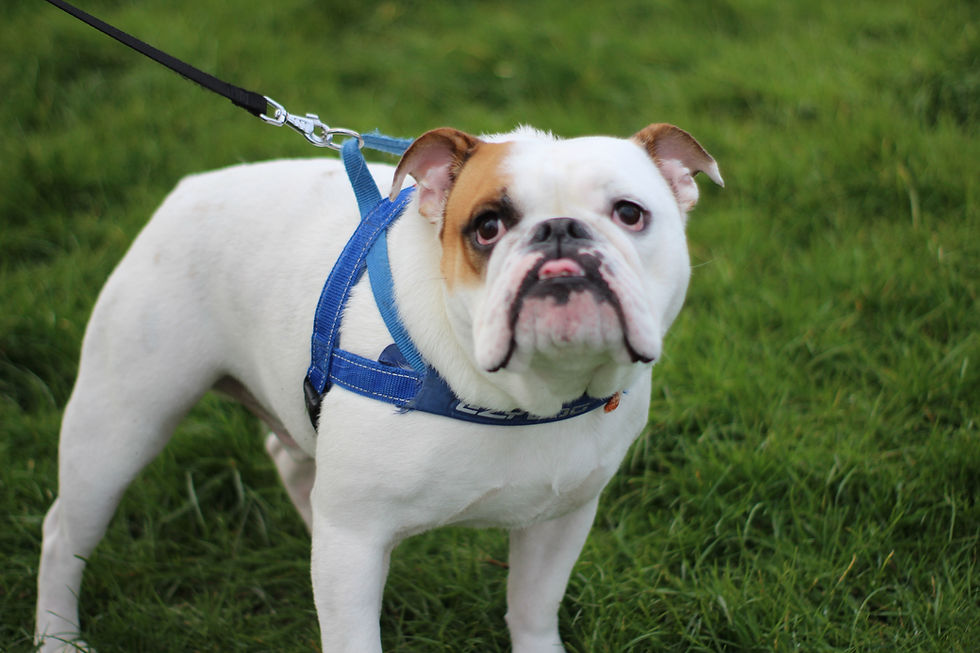
A young Malinois and a middle-aged French Bulldog shouldn't necessarily have the same exercise routine simply because they're both adult dogs.
Consider your dog's:
Breed and genetics
Energy level
Current fitness
Weight
Health
Personality
Daily routine
Weather and temperature
And remember that physical exercise and mental enrichment work together.
A 30-minute walk that allows your dog to sniff, explore, and interact with their environment may provide much more enrichment than simply covering as much distance as possible.
What About High-Energy Dogs?
Some dogs need considerably more activity than the average pet.
Working and herding breeds in particular may still have plenty of energy after a casual walk around the block.
For these dogs, consider combining walks with activities like:
Sniffing and scent games
Fetch
Tug
Training sessions
Hiking
Swimming, when appropriate
Food puzzles
Agility or other dog sports
The goal isn't necessarily to physically exhaust your dog every day. It's to provide an appropriate combination of movement, enrichment, training, rest, and mental stimulation.
How Often Should You Walk a Senior Dog?
One of the biggest misconceptions about senior dogs is that they no longer need much exercise.
Older dogs still benefit from regular movement. Walking can help support mobility, maintain muscle, provide mental stimulation, and give senior dogs opportunities to continue exploring the world.
The difference is that you may need to adjust how they exercise.
Many senior dogs do better with shorter, more frequent walks rather than one long outing.
For example, instead of one strenuous 45-minute walk, an older dog may be more comfortable with several gentle 10–15 minute walks spread throughout the day.
Let your senior dog set the pace and watch for signs that it may be time to shorten the walk, including:
Falling behind
Limping
Frequently stopping
Lying down
Heavy panting
Difficulty navigating curbs or stairs
Increased stiffness after walks
Don't assume slowing down is simply an unavoidable part of getting older, either. Changes in mobility can sometimes be associated with arthritis or other medical conditions, so talk with your veterinarian if you notice a significant change.
And don't underestimate the value of a slow senior sniff walk. Your dog may cover less distance than they used to while still getting plenty of enjoyment and mental stimulation from being outside.
How Do You Know If Your Dog Isn't Getting Enough Exercise?
Every dog is different, but dogs who aren't getting enough physical or mental stimulation may show behaviors such as:
Restlessness
Excessive barking
Destructive chewing
Constantly seeking attention
Difficulty settling
Weight gain
Excess energy or frequent zoomies
More exercise isn't automatically the solution to every behavioral issue, but your dog's daily activity and enrichment are good places to look when their behavior suddenly changes.
Walking Dogs in Hot Weather
This is especially important for our fellow Kailua and Hawaiʻi dog parents.
Warm temperatures, humidity, direct sun, and hot pavement can make a walk much harder on your dog than the same distance in cooler weather.
Whenever possible, choose cooler parts of the day, provide access to water, and pay attention to your dog's breathing and behavior.
Before walking on pavement, check the surface temperature. If the ground feels uncomfortably hot, choose a cooler route or wait until conditions improve.
Flat-faced breeds, senior dogs, puppies, overweight dogs, and dogs with certain medical conditions can be especially sensitive to heat.
Here in Kailua, sometimes the best choice isn't a long midday walk at all. A shorter potty break followed by indoor enrichment or play may be safer until temperatures cool down.
Quality Matters Just as Much as Distance
There's no prize for walking the farthest.
One of the best things you can do is allow your dog time to be a dog.
Let them sniff that bush.
Take a different route.
Practice a few training cues.
Let them investigate an interesting smell.
Give them time to look around.
Walking provides exercise, but it can also be one of the most enriching parts of your dog's day.
So, How Many Walks Does Your Dog Really Need?
There's no universal number.
Puppies generally benefit from several short outings and play sessions rather than long, strenuous walks.
Healthy adult dogs often benefit from one or two substantial walks each day, with the length and intensity adjusted for their breed, fitness, health, and energy level.
High-energy dogs may need additional physical activity and mental enrichment beyond their regular walks.
Senior dogs usually still benefit from daily walks but may be more comfortable with slower, shorter, and more frequent outings.
Ultimately, the best walking routine is the one that meets your individual dog's needs.
Need Help Keeping Up With Your Dog's Walks in Kailua?
Life gets busy. Between work, school drop-offs, appointments, errands, and everything else that comes with living on Oʻahu, fitting your dog's exercise into every day isn't always easy.
That's where we can help.
At Sunshine Pets, we provide personalized dog walks in Kailua based on each dog's age, energy level, personality, and routine. Whether you have an energetic young dog who needs an outlet during your workday or a senior who would rather enjoy a slower sniff-filled stroll, we tailor the visit to the dog in front of us.
Our clients also receive GPS-tracked walks, photos, and visit updates so you can see exactly what your pup was up to.
Because sometimes the best thing you can give your dog isn't the longest walk - it's the right walk for them.


Comments